
How interior design affects mental health is one of the fastest-growing
searches in home decor right now — up 450% in the past year alone.
How Interior Design Affects Mental Health — More Than You Realize
How interior design affects mental health is one of the fastest-growing searches in home decor right now — up 450% in the past year alone. And the reason is simple: people finally connect the way their home looks to the way they feel every single day.
You spend more than 90% of your life indoors. The colors on your walls, the clutter on your counters, the light coming through your windows — all of it shapes your mood, your stress levels, your focus, and even your sleep.
This is not interior design theory. Researchers at UCLA found that people in cluttered homes show measurably higher levels of cortisol — the stress hormone — throughout the day. Environmental psychologist Michal Matlon puts it simply: the environment around you is one of the largest external factors shaping how you feel, and most people completely overlook it.
Here are 10 science-backed ways your home decor affects your mental health — and exactly what to change to feel better starting today.
The Science Behind Your Home and Your Mood
Before getting into the fixes, understand why your home has such a powerful effect on how you feel.
Your brain never stops processing your environment. Even when you sit down to relax, your brain scans the room around you — registering clutter, sharp edges, dim corners, and visual chaos. Each one sends a low-level stress signal that adds up over hours and days.
Your body responds to light like a clock. Natural light regulates your circadian rhythm — your internal body clock. It controls your sleep patterns, your energy levels, and your mood. A dark home disrupts this rhythm and triggers lower serotonin levels, which directly connects to anxiety and depression.
Color triggers emotional responses instantly. Color psychology research shows that different hues activate different parts of the brain. Cool blues and greens calm the nervous system. Warm terracotta and sage create comfort. Harsh reds and overly bright whites create alertness and tension.
Clutter signals unfinished business. A UCLA study found that women who described their homes as cluttered had elevated cortisol levels all day long — not just while looking at the clutter. The brain treats visual disorder as an unresolved problem that requires attention, even subconsciously.
You do not need to redecorate your entire home. Small, intentional changes in the right areas create measurable improvements in how you feel. Start with one room — the one you spend the most time in.
10 Ways Your Home Decor Affects Your Mental Health — And How to Fix Each One
1. Clutter Raises Your Cortisol — Declutter One Surface at a Time
Clutter is the single biggest mental health offender in most homes. Visual disorder overloads your senses, makes relaxation physically difficult, and keeps your brain in a low-level state of alert all day.
The fix does not require a full Marie Kondo overhaul. Pick one surface — your kitchen counter, your bedside table, your desk — and clear it completely. Keep only what you use daily or what genuinely makes you happy.
Clear surfaces give your eyes and brain a place to rest. That rest directly reduces anxiety and makes the whole room feel calmer and more spacious.
[ Start Here ]
⦁ Clear your bedside table — keep only a lamp, one book, and one personal item
⦁ Clear kitchen counters — store small appliances you use less than three times a week
⦁ Clear your entryway — create one hook and one basket for everything that piles up there
The rule: if you have not used it in a year, you do not need it. If it does not make you feel good when you look at it, it does not belong in your space.
2. Poor Lighting Drains Your Energy — Maximize Natural Light First
Natural light boosts serotonin production, regulates your sleep cycle, and directly elevates mood. A 2002 study found that daylight was the most critical factor in boosting productivity and energy — in retail settings, offices, and homes alike.
The first step costs nothing: open your curtains. Pull furniture away from windows. Remove heavy drapes and replace them with sheer curtains that let light through while maintaining privacy.
In rooms without good natural light, add warm-toned bulbs at multiple levels — floor lamps, table lamps, and shelf lights — instead of relying on a single harsh overhead fixture.
[ Amazon Picks ]
⦁ Sheer white linen curtains — let light through, maintain privacy
⦁ Warm LED bulbs in soft white 2700K — mimics natural light
⦁ A plug-in arc floor lamp for dark corners
⦁ Small table lamps for bedside and shelf lighting
Switch every overhead bulb in your home to a warm 2700K LED. The difference in how your home feels is immediate and dramatic — and it costs under $20 total.
3. Wrong Colors Create the Wrong Mood — Choose Colors That Match How You Want to Feel
Color psychology shapes your emotional state every time you walk into a room. Most people choose colors based on what looks nice on a paint chip — without considering how that color makes them feel for hours at a time.
Cool blues and soft greens calm the nervous system and reduce anxiety — ideal for bedrooms and bathrooms. Warm terracotta, sage, and warm beige create comfort and groundedness — perfect for living rooms and kitchens. Harsh whites and overly bright tones create alertness and tension — use them only in work spaces.
You do not need to repaint to change your color story. Add color through cushions, throws, rugs, and artwork. These small changes shift the feeling of a room completely.
[ Colors by Room and Mood ]
⦁ Bedroom — soft sage green, dusty blue, warm blush: calm, sleep-supporting
⦁ Living room — warm terracotta, olive green, warm beige: comfortable, grounding
⦁ Kitchen — warm white, soft yellow, sage: energizing without harsh tension
⦁ Home office — muted blue, soft green: focused, calm, productive
⦁ Bathroom — soft blue, pale green, warm white: spa-like, restorative
4. Sharp Edges Trigger Anxiety — Choose Curved and Rounded Shapes
Architecture psychologist Michal Matlon notes that sharp, angular shapes trigger subtle threat responses in the human brain. Rounded edges, curves, and organic shapes signal safety and allow the nervous system to relax.
Look at your furniture. A coffee table with sharp corners, a rectangular bookshelf with hard angles, harsh geometric art — all of these add low-level tension to a room.
Replace where you can with softer options. A round coffee table instead of a rectangular one. Oval mirrors instead of square. Curved chairs instead of angular ones. Organic abstract art instead of harsh geometric prints.
[ Amazon Picks ]
⦁ A round rattan coffee table — curved, natural, instantly calming
⦁ An oval or round wall mirror — softer than square or rectangular
⦁ Curved ceramic vases in earth tones — organic shapes that calm a shelf or table
You do not need to replace all your furniture. Add one curved element — a round tray, a round mirror, a curved lamp — to offset angular furniture and immediately soften the feeling of the room.
5. No Plants Makes a Room Feel Lifeless — Bring Nature Indoors
Research consistently shows that plants improve concentration, reduce stress, and elevate mood. A study found that the presence of plants in a room improved memory retention by up to 20% and reduced stress measurably.
Beyond the science, plants bring movement, color, and life to a room in a way no object can replicate. A single plant on a windowsill transforms the energy of a space immediately.
Start with low-maintenance options — pothos, snake plants, peace lilies, and ZZ plants all thrive with minimal attention and low light.
[ Best Plants for Mental Health Decor ]
⦁ Pothos — nearly impossible to kill, trails beautifully on shelves
⦁ Snake plant — thrives in low light, purifies air, architectural shape
⦁ Peace lily — blooms indoors, calming white flowers, low maintenance
⦁ ZZ plant — survives irregular watering, glossy leaves, sculptural form
⦁ Monstera — bold, tropical, makes any room feel lush and alive
[ Amazon Picks ]
⦁ A set of terracotta pots in graduated sizes — warm and natural
⦁ A hanging planter for trailing pothos near a window
⦁ A tall rattan plant stand to elevate a floor plant
6. A Cluttered Layout Blocks Energy — Rearrange for Flow
Room layout directly affects how freely you move and breathe in a space. Cramped furniture placement, blocked pathways, and rooms that feel hard to navigate all generate low-level anxiety throughout the day.
Environmental psychologist research shows that rooms organized for easy navigation and natural social interaction reduce anxiety and feelings of overwhelm — even when the decor itself stays the same.
Pull furniture away from walls slightly — this counterintuitively makes a room feel bigger. Create clear pathways at least 36 inches wide between major furniture pieces. Remove anything that blocks natural movement through the room.
[ Quick Layout Fixes ]
- Pull the sofa 6 inches away from the wall — it instantly makes the room feel more intentional
- Create one clear pathway from the door to the main seating area
- Remove furniture you step around or squeeze past — it creates daily micro-frustration
- Face seating toward each other, not just toward the TV — it encourages connection
Take a photo of your room from the doorway. Look at it on your phone. You immediately see layout problems you stop noticing when you live with them every day.
7. No Personal Touches Make a Home Feel Like a Hotel — Add Meaningful Objects
A home without personal expression feels temporary and disconnected. Researchers find that spaces filled with meaningful personal objects — photos, art, souvenirs, handmade pieces — create a stronger sense of identity, comfort, and safety.
These do not need to be expensive. A framed photo of a place you love, a plant you grew yourself, a book collection that tells your story, a piece of art that genuinely moves you — all of these turn a house into a home.
The key is intention. Every object you display should earn its place — either through beauty, meaning, or usefulness. Objects you keep out of habit or guilt drain your energy every time you look at them.
[ How to Add Personal Meaning Without Clutter ]
⦁ Display 3 to 5 deeply meaningful objects on a shelf — not 20 things you feel obligated to keep
⦁ Frame one photograph that makes you genuinely happy every time you see it
⦁ Display one piece of art that connects to something you love — a place, a feeling, a memory
⦁ Keep a plant you personally chose and care for — the act of tending it builds daily positive connection to your space
8. Harsh Overhead Lighting Destroys Atmosphere — Layer Your Lighting
Harsh overhead lighting — a single bright bulb in the center of the ceiling — creates the feeling of an office or a hospital ward. It makes relaxation difficult and gives every room a flat, uninviting quality.
Designers use three layers of lighting: ambient (overall light), task (focused light for specific activities), and accent (decorative light that adds warmth and atmosphere). Most homes have only ambient lighting and nothing else.
Add one floor lamp and one table lamp to your living room. Add a bedside lamp to your bedroom. Use warm bulbs throughout. The transformation happens the moment you turn off the overhead light and turn on the layered alternatives.
[ Amazon Picks ]
⦁ A tall plug-in arc floor lamp in matte black or natural wood
⦁ A small rattan table lamp for a side table or shelf
⦁ Warm Edison bulb string lights for a bedroom or living room corner
⦁ A rechargeable LED candle set — instant atmosphere, no fire risk
Buy a smart plug for your floor and table lamps. Set them to turn on automatically at sunset. Coming home to a warmly lit room instead of darkness changes how you feel the moment you walk through the door.
9. No Dedicated Rest Space Means No True Recovery — Create a Sanctuary Corner
Having one dedicated space in your home purely for rest and recovery makes a measurable difference to mental health. Environmental psychology research shows that a personal sanctuary — even just a corner of a room — gives the brain a clear signal that this space means rest.
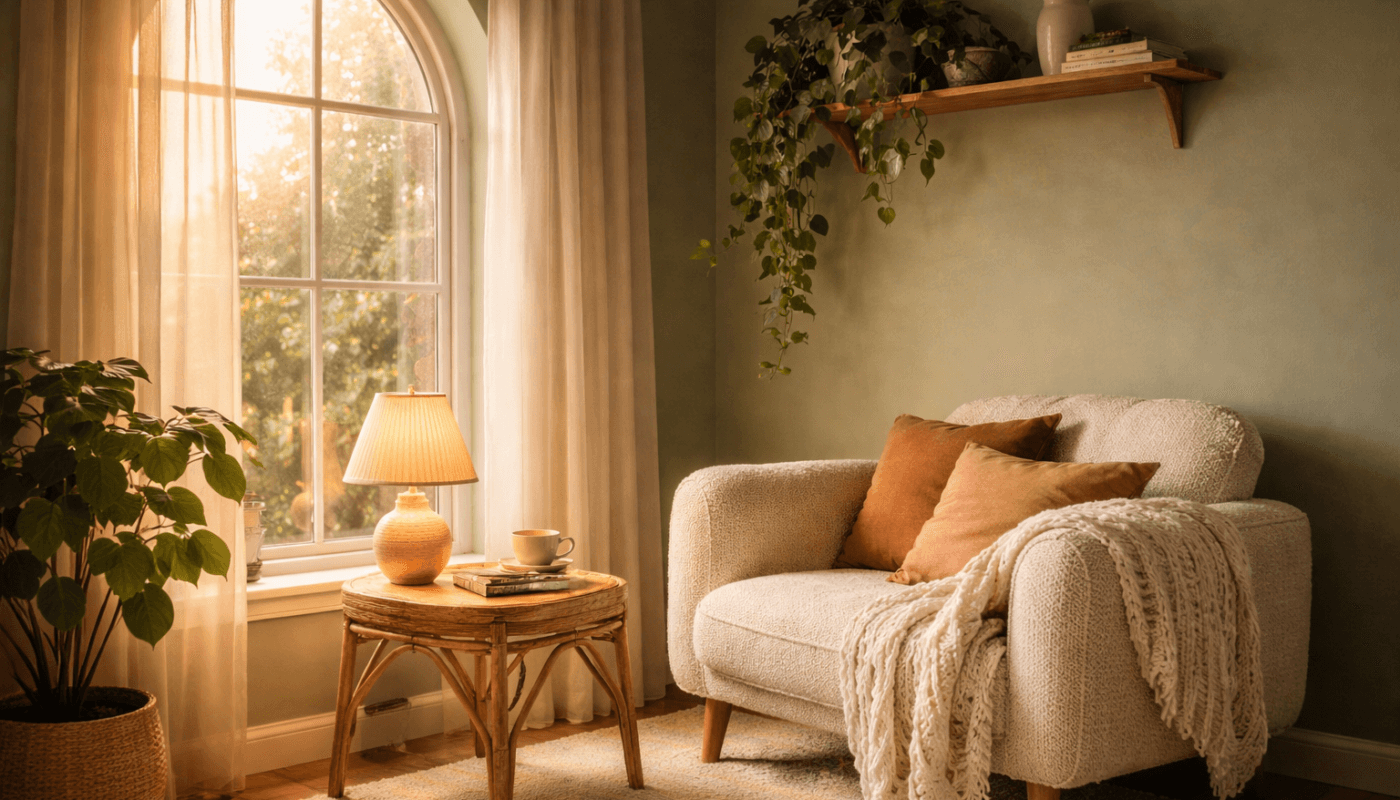
You do not need a whole room. A reading corner with a comfortable chair, a good lamp, a small side table, and a throw blanket works perfectly. The key is that this space serves only one purpose: your comfort and recovery.
Keep phones and work items out of this space. Train your brain to associate it with rest. Within a week, sitting in that corner starts to trigger an immediate relaxation response.
[ How to Build a Sanctuary Corner ]
- Choose a corner near a window or in your bedroom
- Add one comfortable chair — a reading chair, a papasan, or an oversized armchair
- Add a small side table for a lamp, a book, and a drink
- Add a throw blanket and one cushion in a texture you love
- Add one plant and one personal object that makes you feel good
[ Amazon Picks ]
⦁ An oversized boucle reading chair in cream or warm grey
⦁ A small round side table in natural wood or rattan
⦁ A chunky knit throw blanket in warm neutral tones
⦁ A plug-in reading lamp with adjustable arm
10. Visual Chaos Overwhelms the Brain — Use Negative Space Intentionally
Negative space — empty wall sections, clear table tops, open floor areas — gives your eyes and brain a place to rest. Most people fill every surface because empty space feels wasteful. In reality, empty space is what makes everything else feel intentional and calm.
Even a perfectly clean home can feel overwhelming if every wall has art, every shelf has objects, and every corner has furniture. The brain reads fullness as complexity and complexity as stress.
Remove one item from every shelf and every table surface in your home. Step back and look. In almost every case, the space looks better and feels calmer with less.
[ The Negative Space Rule ]
⦁ Leave at least 30% of every shelf empty — let the objects breathe
⦁ Keep one wall in each room completely bare — let it anchor the rest
⦁ Clear every table surface to just one or two intentional objects
⦁ Leave floor space open — clear pathways and open floor areas make any room feel bigger and calmer
Take a photo of your most cluttered shelf. Remove half the objects. Take another photo. Compare them. The second photo almost always looks more expensive, more designed, and more peaceful — with less in it, not more.
Room by Room Quick Fix Guide
Use this as your action plan. Pick one room and work through it before moving to the next.
Bedroom
⦁ Clear the bedside table to lamp, book, and one personal item only
⦁ Switch to warm 2700K bulbs — remove overhead lighting at night
⦁ Add one plant on the windowsill
⦁ Choose one piece of art in a calming color — sage, dusty blue, warm blush
⦁ Add blackout curtains for deeper sleep
Living Room
⦁ Pull the sofa away from the wall
⦁ Remove objects from half the shelf surfaces
⦁ Add one floor lamp and one table lamp — stop relying on overhead lighting
⦁ Add one round mirror to reflect natural light
⦁ Add one trailing plant on a high shelf or stand
Kitchen
⦁ Clear all counters except daily-use appliances
⦁ Add one small plant near the window
⦁ Replace harsh overhead bulb with a warm-toned alternative
⦁ Display one or two meaningful objects — not ten
Home Office
⦁ Clear the desk to only what you actively use
⦁ Add a plant within eyeline of your screen
⦁ Add a task lamp — remove reliance on overhead lighting
⦁ Add one personal object that makes you feel grounded
10 Mental Health Decor Upgrades Under $30
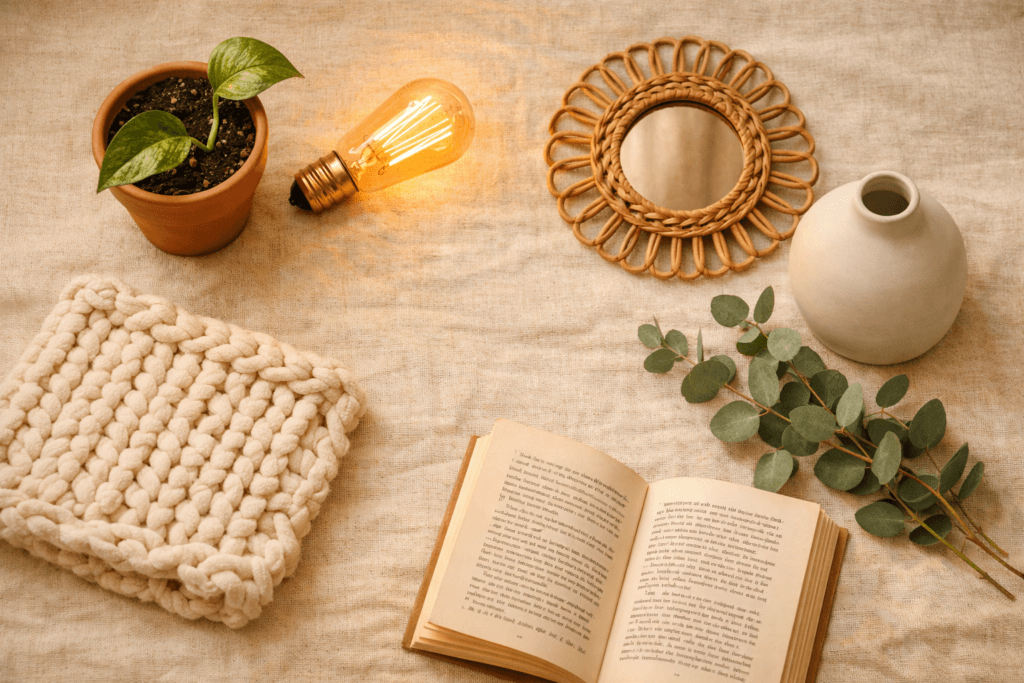
- Warm LED bulbs — replace every overhead bulb in your home — under $15 total
- A pothos plant — $5 to $10 at any garden center or grocery store
- Sheer white curtains — replace heavy drapes in your main room — under $25
- A small rattan tray — corrals clutter on a coffee table or dresser — under $20
- A terracotta pot set — repot plants for instant warmth — under $15
- A chunky throw blanket — adds texture and comfort to any chair or sofa — under $25
- A plug-in string of warm lights — transforms a bedroom corner — under $15
- A small round mirror — reflects light, softens a wall — under $25
- A simple white ceramic vase — instant elegance on any shelf — under $10
- A free botanical print — download, print at pharmacy, frame in a basic frame — under $15 total
Frequently Asked Questions
How does home decor affect mental health?
Your home environment constantly signals safety or stress to your brain. Clutter raises cortisol. Poor lighting reduces serotonin. Harsh colors activate the nervous system. The right decor — warm lighting, clear surfaces, natural elements, calming colors — creates an environment that actively supports your mental well-being throughout the day.
What decor changes improve mental health the most?
Decluttering one surface at a time, switching to warm layered lighting, adding at least one plant, and choosing calming colors for your bedroom deliver the biggest mental health improvements. These changes cost very little and create immediate, noticeable differences in how you feel at home.
What colors are best for mental health at home?
Soft blues and greens calm anxiety and support sleep — ideal for bedrooms. Warm terracotta, sage green, and warm beige create comfort and groundedness — perfect for living spaces. Avoid harsh whites, bright reds, and overly saturated colors in spaces meant for relaxation.
Do plants really improve mental health?
Yes — research shows plants reduce stress, improve concentration by up to 20%, and elevate mood measurably. The act of caring for a plant also builds a daily positive connection to your space. Start with one low-maintenance plant like a pothos or snake plant.
How do I make my home feel more calming on a budget?
Switch to warm LED bulbs, declutter one surface in every room, add one plant, open your curtains fully every morning, and add one layered light source like a floor lamp or table lamp. These five changes cost under $50 total and transform how your home feels.
The Bottom Line
How interior design affects mental health comes down to one simple truth: your home either restores you or drains you. Very few homes do this perfectly by default.
But the gap between a draining home and a restorative one is smaller than most people think. You do not need a renovation. You do not need a designer. You need warm light, clear surfaces, a few plants, and colors that match how you want to feel.
Pick one fix from this list today. Start with the room where you spend the most time. Make one change and notice how it shifts the feeling of the space.
Your home should be the place that restores you most. Make it earn that role.
— Suhayb, DecorWithVibes.com
Also check out! 8 Dining Room Wall Decor Ideas That Look Expensive (But Aren’t)
Leave a Reply